
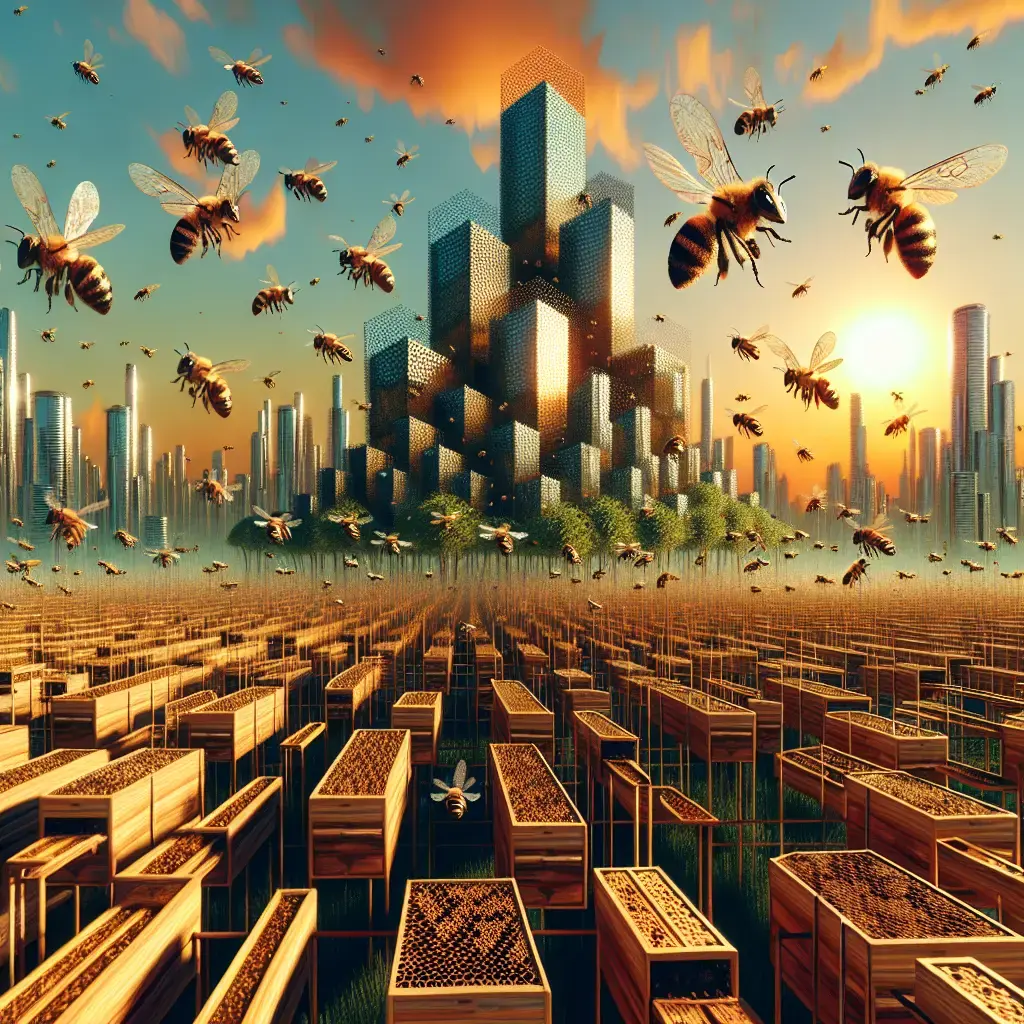

Urban beekeeping is reaching new heights as innovative agrivoltaic projects blend the energy of solar arrays with the vital buzz of honeybee colonies and the grazing of livestock, creating a more sustainable and productive urban landscape.
Urban beekeeping has long been celebrated for its environmental, educational, and agricultural benefits, but recent developments in agrivoltaics—where solar energy generation is combined with agricultural activities—are propelling it into exciting new territory. One shining example is a ground-breaking project in Halifax County, Virginia, where 500,000 honeybees have found a home amidst rows of solar panels and flocks of grazing sheep.
What Is Agrivoltaics, and Why Does It Matter for Urban Beekeeping?
Agrivoltaics is the practice of utilizing the same land for both solar energy production and agriculture, offering a sustainable solution for land use in urban and peri-urban areas. Instead of covering valuable land with just solar panels, agrivoltaic projects aim to stack functions—generating clean energy while supporting crops, livestock, and, crucially, pollinators like honeybees.
Urban landscapes are rapidly expanding, often at the expense of green spaces. Integrating beekeeping with solar farms in or near urban areas maximizes land productivity, preserves habitats for pollinators, supports local food systems, and enhances community engagement with sustainability.
A Buzzing New Addition: Honeybees in the Solar Field
At the 65-megawatt Crystal Hill solar project in Virginia, over half a million honeybees now thrive alongside grazing sheep. This innovative site demonstrates several key benefits:
- Biodiversity: Beehives are strategically placed at the edge of the solar array, where bees can access a wide variety of flowering plants thriving under and around the panels.
- Research: Ongoing studies are analyzing pollinator activity, plant diversity, soil quality, and even the honey produced on-site.
- Community Impact: More than 400 pounds of honey per year will be shared with local food banks, schools, and faith organizations.
The Synergy: Bees, Sheep, and Solar Panels
Why combine these elements? The answer lies in ecological harmony and practical land management. Sheep keep vegetation in check without the need for harmful herbicides or heavy machinery, naturally fertilizing the soil and maintaining healthy plant growth. The varied vegetation supported by the agrivoltaic design provides abundant forage for bees, supporting healthy hives and better pollination for surrounding farms. Both sheep and plants benefit from the cooling shade provided by solar panels, especially during hot urban summers.
Overcoming Challenges Through Innovation
With challenges like climate change, trade disruptions, and threats such as colony collapse disorder decimating bee populations, projects like this step in to fill gaps left by reduced public funding for pollinator research. Private sector initiatives are now leading efforts to study how pollinators interact with solar environments, the effects of habitat design on bee health, and the wider impacts on local agriculture.
By providing data and real-world results from innovative models like Crystal Hill, these projects help build resilience for urban agriculture and support research that would otherwise go unfunded.
A Model for Urban Beekeeping's Future
This project’s insights will inform how cities and developers approach sustainable land use. By demonstrating that clean energy production can go hand-in-hand with urban beekeeping and livestock grazing, these agrivoltaic sites set an inspiring example for urban planners, farmers, and community leaders.
Key Takeaways for Urban Beekeepers and Advocates:
- Partnerships Matter: Collaboration between solar developers and local beekeepers or pollinator companies enhances biodiversity and research opportunities.
- Community Benefits: Locally produced honey supports food security and public education.
- Resilience: Diversifying land use strengthens urban agriculture against climate uncertainties and economic shifts.
- Scalability: Research from pioneering sites like Crystal Hill can guide similar projects nationwide.
Urban Beekeeping Meets Clean Energy: The Path Forward
Urban beekeeping has always been about more than just honey—it’s about cultivating thriving ecosystems within our cities. As agrivoltaic projects continue to expand, they promise to bring pollinators back to urban environments while generating clean energy and supporting local communities.
If you’re passionate about beekeeping or sustainability in urban spaces, keep your eye on innovative models like the Crystal Hill project. These collaborative efforts may just be the key to a greener, buzzier future for our cities.
For more details about this inspiring initiative, visit the original article here.
Stay curious—and keep your city buzzing!


Leave a Comment